About
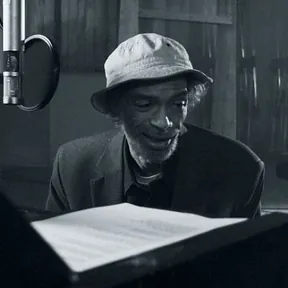
Though Scott-Heron's experiences in Tennessee must have been difficult, they proved to be the seed of his writing career, as his first volume of poetry was written around that time. His education in the New York City school system also proved beneficial, introducing the youth to the work of Harlem Renaissance poet Langston Hughes and LeRoi Jones. After publishing a novel called The Vulture in 1968, Scott-Heron applied to Pennsylvania's Lincoln University. Though he spent less than one year there, it was enough time to meet Brian Jackson, a similarly minded musician who would later become a crucial collaborator and integral part of Scott-Heron's band. Given a bit of exposure -- mostly in magazines like Essence, which called The Vulture "a strong start for a writer with important things to say" -- Scott-Heron met up with Bob Thiele and was encouraged to begin a music career, reading selections from his book of poetry Small Talk at 125th & Lennox while Thiele recorded a collective of jazz and funk musicians, including bassist Ron Carter, drummer Bernard "Pretty" Purdie, Hubert Laws on flute and alto saxophone, and percussionists Eddie Knowles and Charlie Saunders; Scott-Heron also recruited Jackson to play on the record as pianist. Small Talk's most important track was "The Revolution Will Not Be Televised," an aggressive polemic against the major media and white America's ignorance of increasingly deteriorating conditions in the inner cities. Scott-Heron's second LP, 1971's Pieces of a Man, expanded his range, featuring songs such as the title track and "Lady Day and John Coltrane," which offered a more straight-ahead approach to song structure (if not content).
From 🇺🇸 United States
Genres