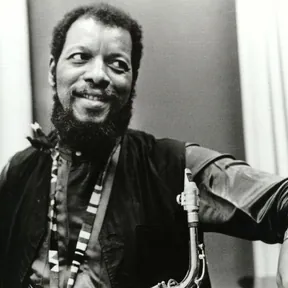
Ornette Coleman
77.1K
About
Saxophonist and composer Ornette Coleman was simultaneously one of the most beloved and polarizing figures in jazz history. Though now celebrated as a fearless innovator and a genius, he was initially regarded by peers and critics as rebellious, disruptive, and even a fraud. After being assaulted and having his horn smashed by hostile jazzmen, he switched to the white plastic alto sax that became his trademark. His instantly recognizable, keening, blues-drenched tone always sought to reflect the depth of human emotion and its utterance. Coleman's compositions from "Lonely Woman" to "Snowflakes and Sunshine" freed jazz from chord changes, fixed rhythms, and conventional harmony. His developed harmolodic system refused accepted notions of lone soloists improvising over accompanists, in favor of ensemble players improvising simultaneously around evolving melodic and rhythmic patterns. His revolutionary albums for Atlantic, including 1959's The Shape of Jazz to Come and 1961's Free Jazz (the album that inspired John Coltrane's Ascension), have been studied and covered by generations and taught in classrooms. In 1972 Coleman employed harmolodics in the large-scale work Skies of America in collaboration with the London Symphony Orchestra. In 1976, he applied it to electric jazz-funk on Dancing in Your Head. During the 1980s, Coleman made pioneering recordings with guitarist Pat Metheny (Song X) and cut In All Languages, whose compositions were performed by an acoustic quartet and his electric Prime Time band. In 1991, he recorded Naked Lunch with Howard Shore, and in 2006 he debuted a new electro-acoustic ensemble for Sound Grammar.
From 🇺🇸 United States
Genres