Radiohead
43.7M
5.0M
About
Radiohead are a touchstone for all that is fearless and adventurous in rock, evolving from self-loathing anthems to moody prog rock suites to weathered, if shimmering ballads. Inheritors of a throne previously occupied by David Bowie, Pink Floyd, and Talking Heads (from whom they took their name), the British band spliced Floyd's spaciness with U2's messianic arena rock heft and bridged the gap with guitar skronk borrowed from the '80s American underground. The jagged interjections on "Creep," the band's Top Ten U.K., Top 40 U.S. breakthrough from their debut album Pablo Honey (1993), recalled Pixies and Nirvana, but in the throes of the alternative rock explosion, Radiohead were the odd band out, seen as dour art-rock students at home and as one-hit wonders in the States. During the peak of Brit-pop, Radiohead released The Bends (1995), a leap forward that gained them some traction, but it was OK Computer (1997), a bold set fueled by film music, Krautrock, and electronica, that broke down doors for the band upon its entry at the top of the U.K. and U.S. charts. Soon, whenever rock bands dabbled in electronics, it was derived not from tightly sequenced rhythms, but rather, from glassy textures and introspection, a sensibility pioneered by the quintet. Radiohead doubled down on this aesthetic with Kid A (2000) and Amnesiac (2001), favoring minimal arrangements and elements of avant-garde jazz over concise hooks. From that point on, Radiohead have occasionally worked with conventional song structures but have been drawn toward unusual paths heard on Hail to the Thief (2003) and In Rainbows (a surprise, pay-what-you-want 2007 release), followed the next decade by The King of Limbs (2011) and A Moon Shaped Pool (2016). Inducted into the Rock & Roll Hall of Fame in 2019, Radiohead have focused primarily on catalog releases, side projects, and solo pursuits during the 2020s.
From 🇬🇧 United Kingdom
Genres
Top Fans
View AllFestivals
View All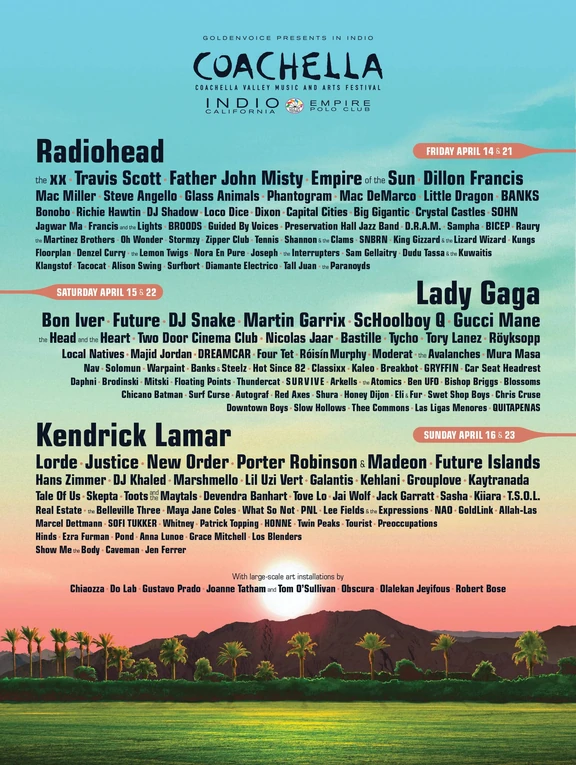
Coachella 2017 W2
Indio, CA
Apr 21, 2017
Coachella 2017 W1
Indio, CA
Apr 14, 2017
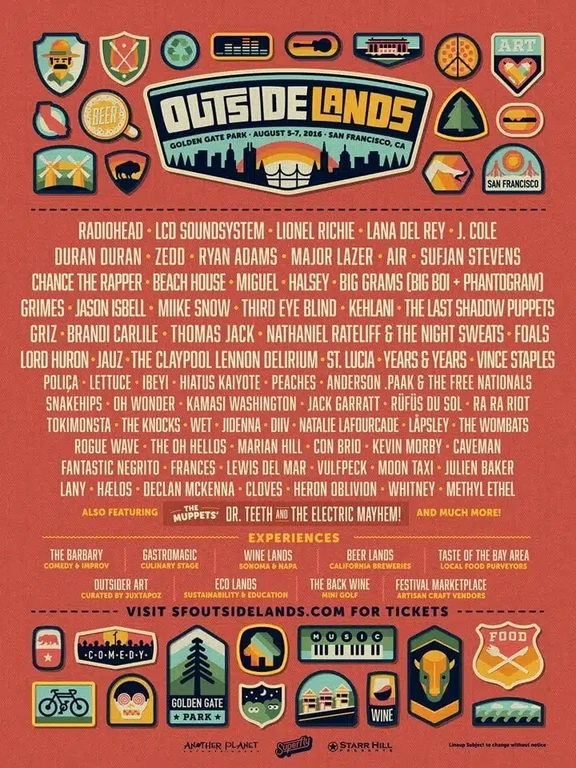
Outside Lands 2016
San Francisco, CA
Aug 5, 2016
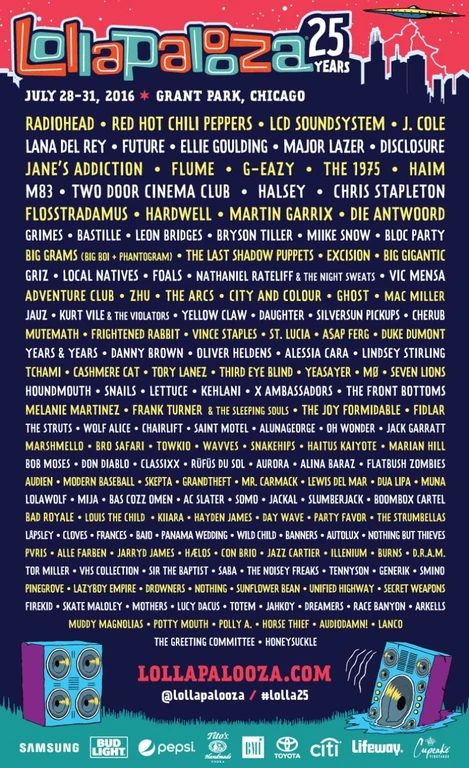
Lollapalooza 2016
Chicago, IL
Jul 28, 2016
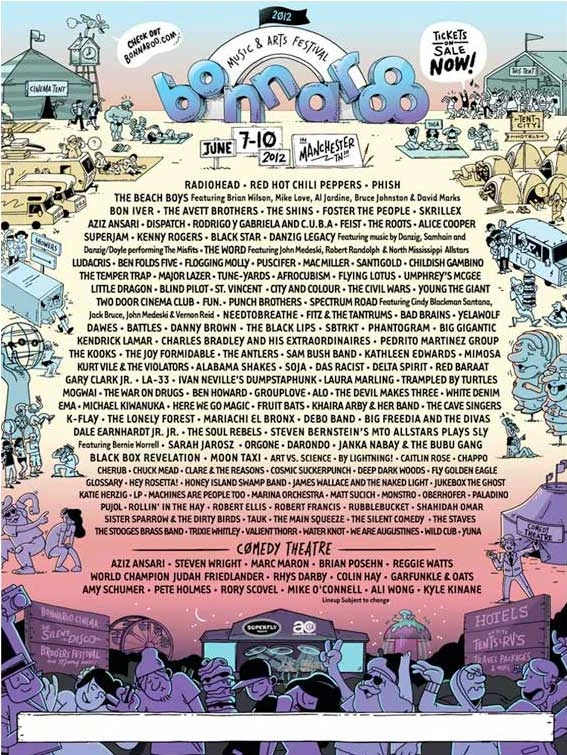
Bonnaroo 2012
Manchester, TN
Jun 7, 2012
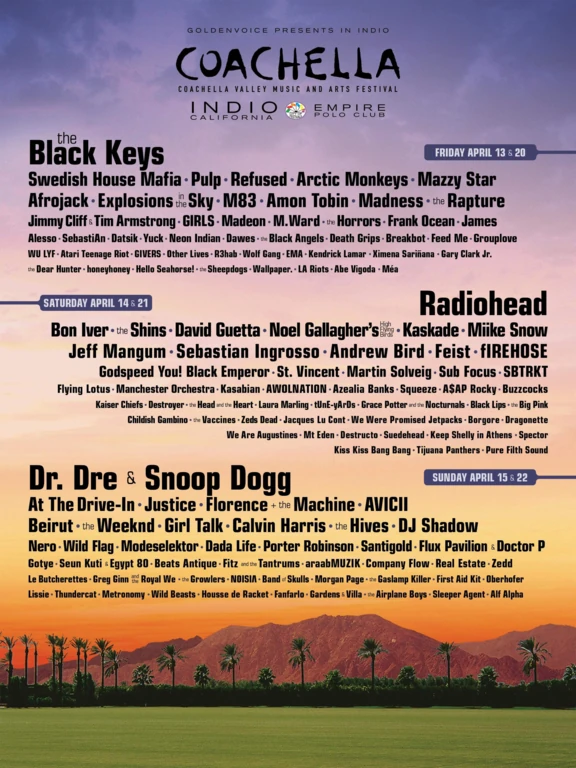
Coachella 2012 W2
Indio, CA
Apr 20, 2012
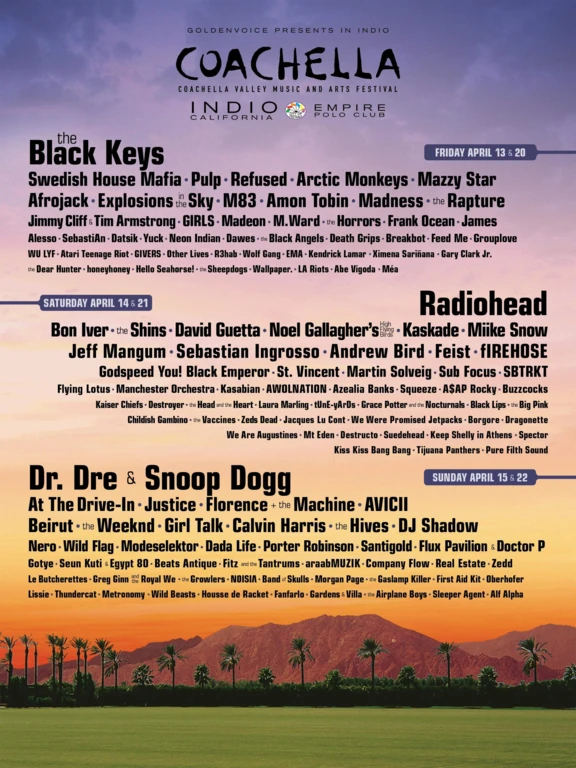
Coachella 2012 W1
Indio, CA
Apr 13, 2012
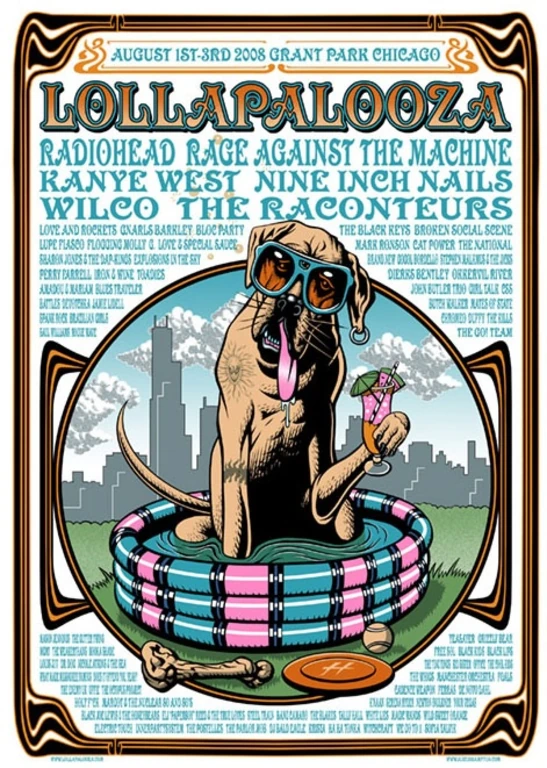
Lollapalooza 2008
Chicago, IL
Aug 1, 2008
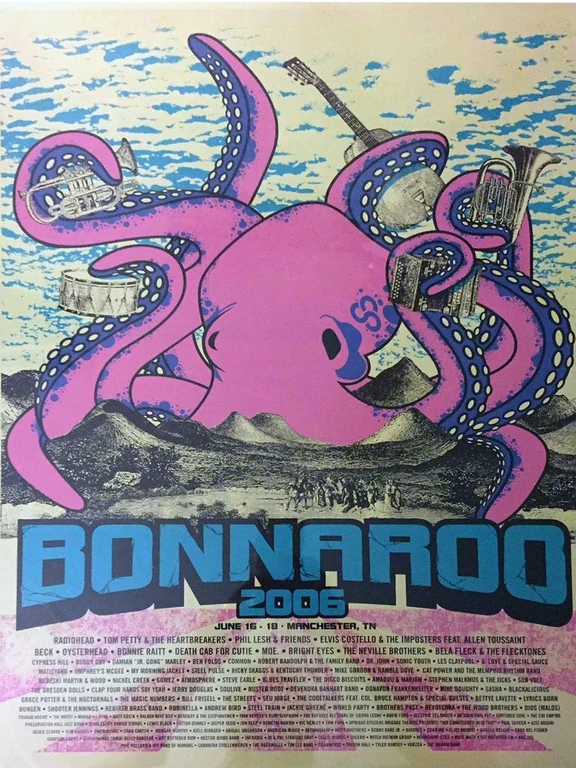
Bonnaroo 2006
Manchester, TN
Jun 15, 2006
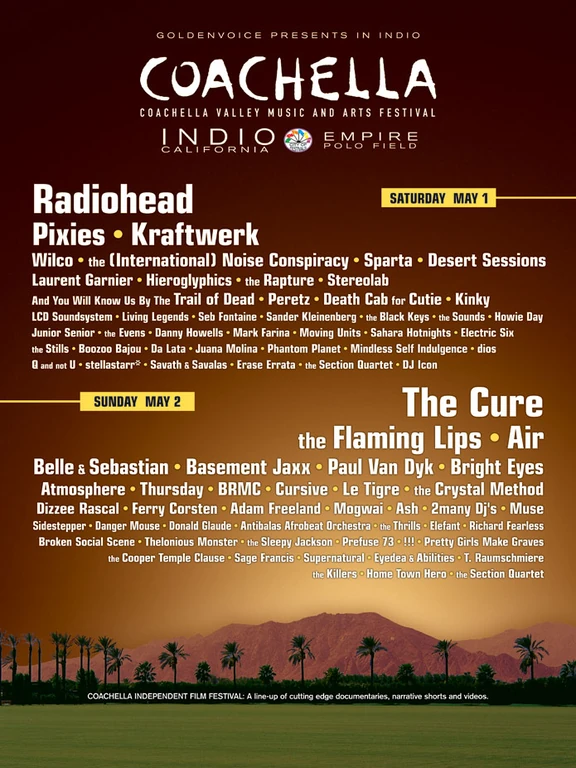
Coachella 2004
Indio, CA
May 1, 2004