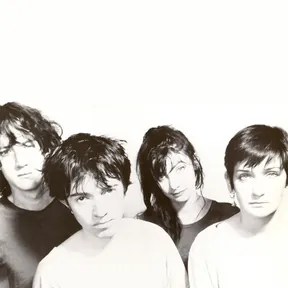
My Bloody Valentine
827.7K
200.0K
About
When My Bloody Valentine's second album, Loveless, finally appeared in November 1991, it was greeted with uniformly excellent reviews and became a hit within the U.K., reaching number 24 on the charts. In America, the group made significant inroads, particularly by supporting Dinosaur Jr.; the band’s European dates became known for their intense volume. Though it was soon regarded as a classic,Loveless didn't sell in numbers to recoup its reported 500,000 dollar recording cost and Creation dropped the band from their roster (the label wouldn't fully recover until the 1994 signing of Oasis). In October 1992, My Bloody Valentine signed with Island Records, and Shields built a home studio with the advance that was completed in April 1993. That year, the band contributed a cover of Louis Armstrong’s “We Have All the Time in the World” to Peace Together, a charity compilation that benefitted an organization working for peace in Northern Ireland. However, technical difficulties and creative blocks hampered the group. Though Shields reportedly completed two separate albums, including pieces inspired by the U.K.’s thriving electronic music scene, My Bloody Valentine’s only other output during the ‘90s was a 1996 cover of Wire’s "Map Ref. 41°N 93°W" for Whore: Various Artists Play Wire. O'Ciosoig and Googe departed in 1995, with the former moving to America and joining Hope Sandoval & the Warm Inventions and the latter forming Snowpony with Katharine Gifford after spending a year driving a cab. In 1997, Butcher left following another attempt to record My Bloody Valentine’s third album. Shields spent several years collaborating with Dinosaur Jr. and Yo La Tengo among others, became a touring member of Primal Scream, and contributed songs to the soundtrack for Sofia Coppola’s 2003 film Lost in Translation.
From 🇮🇪 Ireland
Genres